Diet Plan for Hostel & PG Students (Mess Food + No-Cook Ideas)
An Indian diet plan for hostel and PG students: what to pick in the mess, a no-cook room kit, cheap protein, and versions for weight loss or gain.
 EZMeal team
7 min read
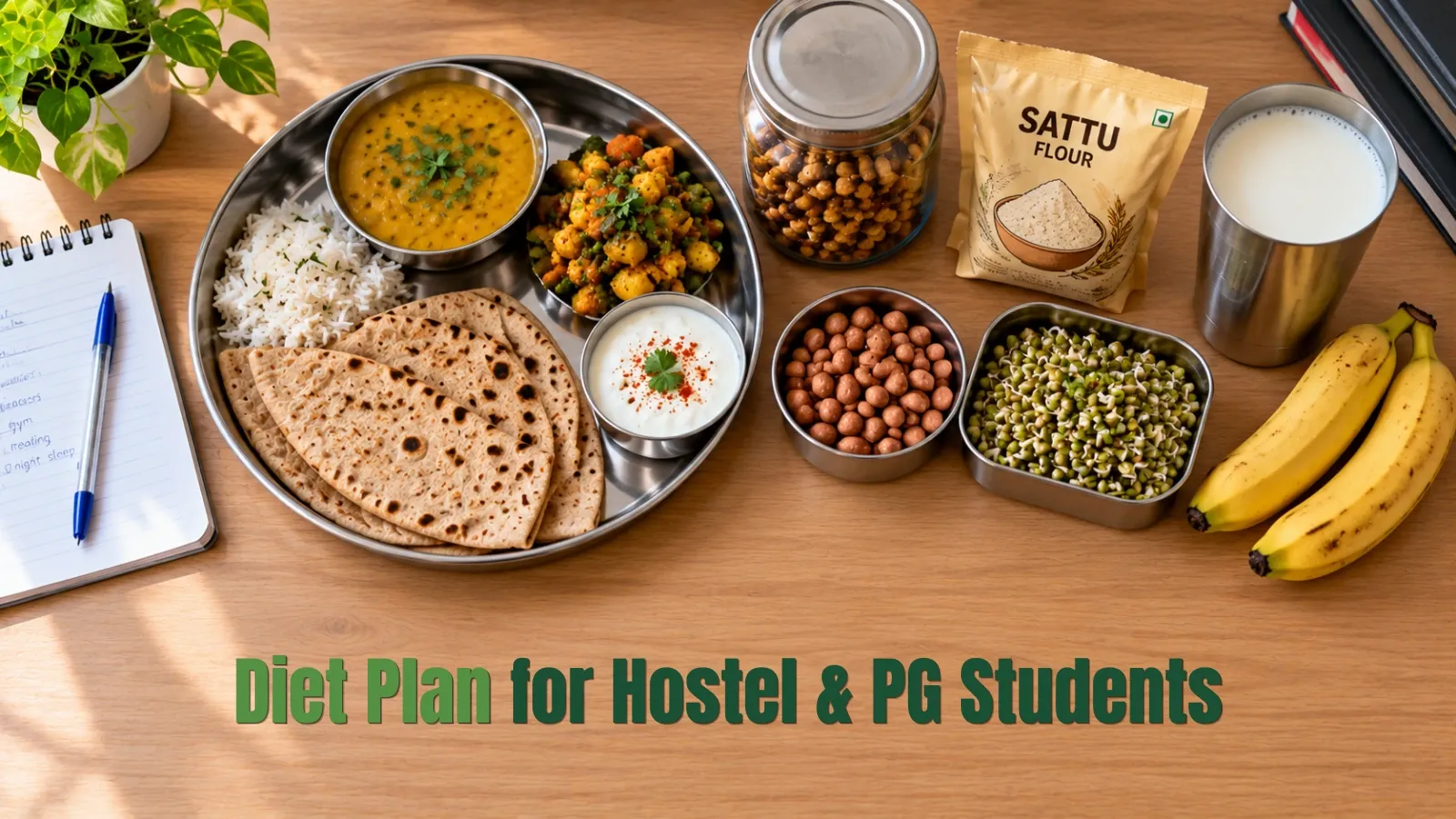
A healthy hostel or PG diet doesn't need a kitchen. Eat all three mess meals, pick dal, curd and a protein sabzi over fried items, and keep a small no-cook kit in your room: roasted chana, peanuts, sattu, bananas, and sprouts soaked in a box. That fills the protein gap mess food usually leaves. The sample day below gives about 2,000 kcal and 65 g protein from mess food plus room add-ons, with simple changes for losing or gaining weight.
The hostel food problem
Mess food is heavy on roti and rice, light on protein. Dal is often thin, and paneer or eggs show up only a few times a week.
Oil is out of your control. Sabzis and parathas can be oily, and you can't change the recipe.
Late nights lead to midnight Maggi. Skipped breakfasts and 1 am instant noodles, chips and cold drinks are the classic hostel pattern.
Tight budget, no kitchen. Many hostels don't allow cooking appliances, so the room kit has to be no-cook.
The fix is to pick well inside the mess, and add a few cheap protein foods outside it.
A sample day: mess food + room add-ons
Mess food varies a lot, so these numbers are estimates for typical portions. Mess rotis are often larger and oilier than home phulkas, at about 120 kcal each.
Time | Where | What to eat | ≈ kcal | ≈ Protein |
|---|---|---|---|---|
8:00 am | Mess | 1 plate poha or upma + 1 glass milk | 380 | 11 g |
8:00 am | Room add-on | 20 g roasted peanuts (or 2 boiled eggs if the mess has them) | 115 | 5 g |
11:00 am | Room | 1 banana or seasonal fruit | 90 | 1 g |
1:00 pm | Mess | 3 roti + 1 katori dal + 1 katori sabzi + ½ katori rice + 1 bowl curd + salad | 800 | 23 g |
5:00 pm | Room | Sattu drink: 30 g sattu in a glass of water with lemon, salt and roasted jeera | 120 | 6.5 g |
8:30 pm | Mess | 2 roti + 1 katori rajma, chole or paneer sabzi + 1 katori dal | 530 | 19 g |
Total | ≈2,035 | ≈65 g |
With 2 boiled eggs instead of peanuts at breakfast, protein goes up to about 73 g.
Want to lose weight?
Have 2 roti at lunch and skip the rice.
Skip the peanuts, or swap them for a bowl of sprouts.
Ask for roti without ghee, and pick the drier sabzi.
That brings the day to about 1,700 kcal, a weight-loss level for most young men. Most women will do better nearer 1,400–1,500 kcal; see the calorie guide.
Want to gain weight?
Add 1 glass milk + 2 bananas + 30 g peanuts before bed (about +480 kcal, +15 g protein).
Add 1 extra roti at each mess meal.
Add a bowl of soaked sprouts or 2 boiled eggs in the evening.
That takes you to about 2,700–2,900 kcal. For a full gaining plan, see the 2500 and 3000 calorie plans.
What to pick in the mess
Pick more | Take less |
|---|---|
Dal: ask for the thicker part from the bottom of the pot | Puri, bhatura, pakoras, fried papad |
Rajma, chole, kadhi, paneer or soya sabzi | Aloo-heavy sabzis on most days |
Curd, raita, buttermilk | Extra rice on top of rotis |
Eggs on egg days, chicken or fish on non-veg days | Sweets after every meal |
Salad: onion, cucumber, carrot, whatever is there | Rotis with ghee brushed on, if you're losing weight |
Two mess habits that help:
Protein first. Fill your plate with dal, curd and the protein sabzi before you take rice.
Don't skip breakfast. Even if it's just bread and milk, eating it stops the 11 am canteen samosa and the 1 am Maggi.
The no-cook room kit
These need no stove and keep for days or weeks. They cover the protein and snack gaps between mess meals.
Item | How to use it | Why |
|---|---|---|
Roasted chana | A handful as a snack | About 6.5 g protein per 30 g, very cheap |
Peanuts (roasted) | With breakfast or as a snack | Cheap calories and protein |
Sattu | Stir 30 g into water with lemon and salt, or into milk | About 6.5 g protein, filling, no cooking |
Moong for sprouting | Soak overnight in a box, drain, keep 1–2 days; add onion, tomato, lemon | About 9 g protein per katori |
Bananas and seasonal fruit | Snack, or with milk | Cheap, quick energy |
Milk | From the mess or a local dairy | Protein and calcium |
Makhana | Snack | Light and filling |
Peanut butter | On bread or a banana | Easy calories for gaining |
Instant oats (if a kettle is allowed) | Mix with hot water or milk | Quick breakfast when you miss the mess |
If the mess sells boiled eggs, buy 2 a day. It's one of the cheapest ways to add protein.
Cheapest ways to get protein in a hostel
Roughly in order of protein for the money, though prices vary by city:
Soya chunks: about 21 g protein per 40 g dry. Only useful if your mess will cook them, or you can soak them in hot water and mix them into a chaat.
Eggs: about 6 g each, often sold boiled in the mess or canteen.
Roasted chana: about 6.5 g per 30 g, and needs no prep.
Peanuts: about 7.5 g per 30 g, plus useful calories if you're gaining.
Sattu: about 6.5 g per 30 g, mixed into water or milk.
Milk and curd: about 8 g per glass of milk, 5 g per bowl of curd.
Moong sprouts: about 9 g per katori, made from dry moong for very little.
For exact protein per katori and per glass, see our protein in Indian foods chart.
Eating during exams
Keep the three mess meals, even when you're studying late. Skipping lunch to study usually ends in a junk-food dinner.
Plan a late-night snack instead of instant noodles: a glass of milk with a banana, roasted chana, or a sattu drink.
Limit caffeine. 2–3 cups of tea or coffee a day is plenty. Energy drinks are high in sugar and caffeine, and they wreck sleep.
Sleep matters more than any "brain food". A tired brain craves sugar and fried snacks. Even 6–7 hours makes a difference.
Want a plan built around your mess menu? EZMeal sets your calorie and protein targets for losing or gaining weight, then builds 7 days of simple Indian meals you can mostly eat from a mess or PG. Day 1 is free; the full plan is ₹149, once. Create my free plan →
Mistakes hostel students make
Midnight instant noodles every night. One packet is about 350–400 kcal with little protein. Keep a better late-night option in the room.
Skipping the mess and ordering in. Delivery food is usually oilier and costs far more. Use it as a treat, not a habit.
Cold drinks and packaged juice. A 500 ml bottle can carry around 50 g of sugar. Water, buttermilk or nimbu pani are better.
Canteen snacks between every class. Samosas, puffs and chips add up fast. Carry chana or a fruit.
Living on chai and biscuits. Common during exams or on busy days. They fill you up without giving protein.
Ignoring sleep. Late nights increase hunger and cravings the next day, whatever you eat.
FAQ
How can I eat healthy in a hostel mess?
Eat all three mess meals, take more dal, curd and the protein sabzi, take less of fried items and extra rice, and add salad when it's there. Fill protein gaps with roasted chana, peanuts, sattu, sprouts, milk or boiled eggs.
How can a hostel student gain weight?
Eat every mess meal, add an extra roti at lunch and dinner, and keep calorie-dense snacks in your room: peanuts, bananas, milk and peanut butter. A glass of milk with 2 bananas and a handful of peanuts before bed adds about 480 kcal. Lifting weights helps the gain be muscle.
How can I lose weight while living in a hostel?
Have 2 rotis instead of 3, skip extra rice and fried items, ask for rotis without ghee, and swap late-night noodles for roasted chana or a fruit. Walking around campus daily helps too.
What are the best high-protein foods for students with no kitchen?
Roasted chana, peanuts, sattu, sprouted moong, milk, curd and boiled eggs. None of them need a stove, and all are cheap.
Is sattu good for students?
Yes. It's roasted chana flour, with about 6.5 g protein per 30 g. It mixes into water or milk in a minute and keeps you full for hours.
Is it okay to eat instant noodles in a hostel?
Once in a while, yes. As a nightly habit, it adds 350–400 kcal with little protein. If you do have them, add a boiled egg or some sprouts and skip the second packet.
Sources
ICMR-NIN: Dietary Guidelines for Indians (2024)
Food values: Indian Food Composition Tables (IFCT 2017), ICMR-NIN
This article is general information for healthy adults, not medical advice. If you have a health condition, are pregnant or take regular medication, speak to your doctor or a registered dietitian before changing your diet.