High-Protein Indian Vegetarian Diet Plan (100 g a Day)
A full vegetarian Indian day with 100 g protein in about 1,800 kcal, without supplements, plus the best veg protein foods and a week of meals.
 EZMeal team
7 min read
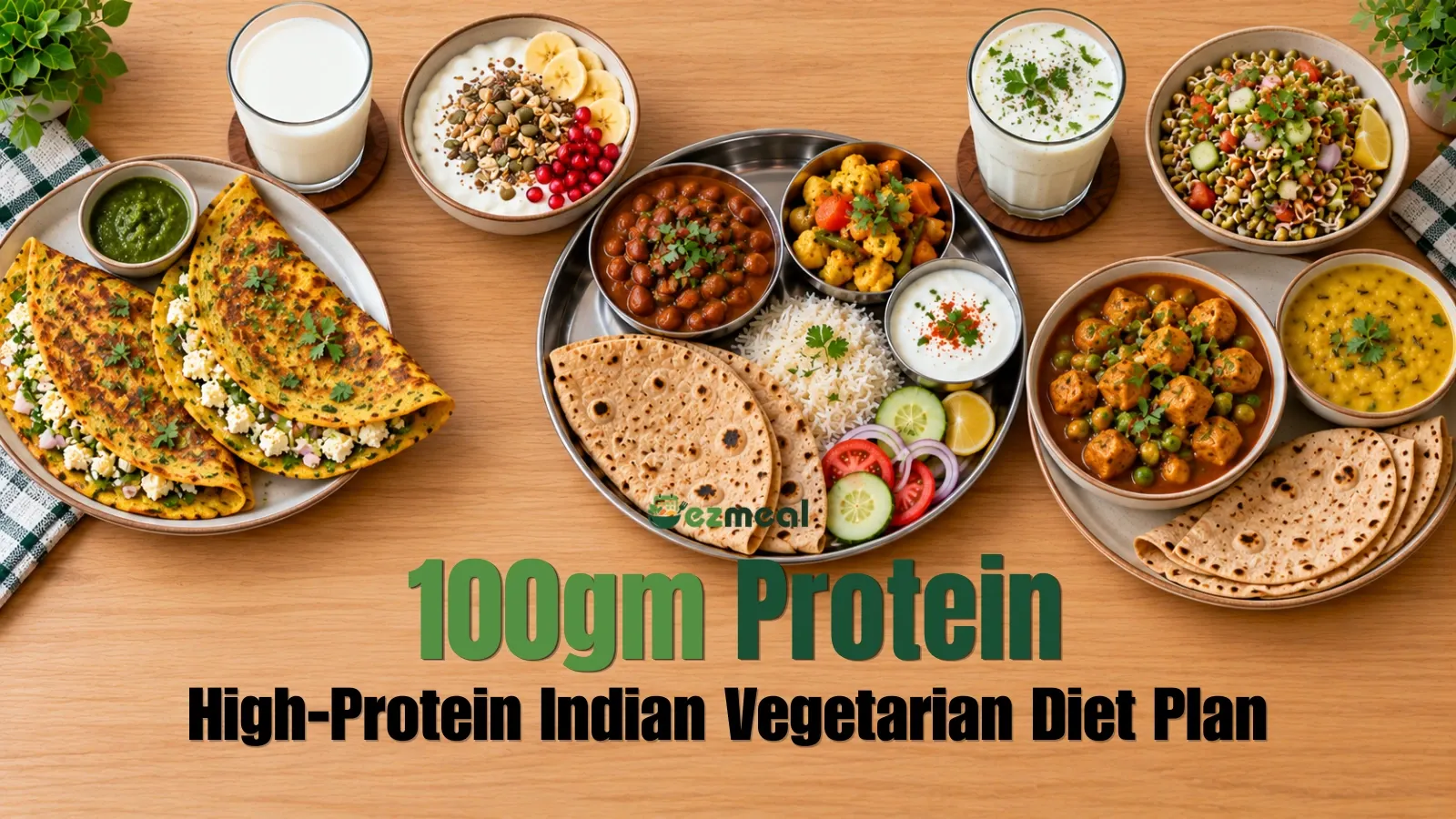
You can get 100 g of protein a day on a vegetarian Indian diet without supplements. The trick is a protein food at every meal: paneer-besan chilla and milk for breakfast, curd with seeds mid-morning, rajma and chaas at lunch, sprouts in the evening, and soya-matar curry with moong dal at dinner. The full day below gives about 103 g protein in roughly 1,830 kcal, using everyday Indian foods.
Most vegetarian Indian diets fall well short of this, because roti and rice fill the plate while dal is a single small katori. This guide shows how to fix that without changing what you eat beyond recognition.
How much protein do you actually need?
Your goal | Protein per kg of body weight | For a 65 kg person |
|---|---|---|
Basic health (ICMR-NIN minimum for adults) | 0.83 g | ≈54 g |
Weight loss, keeping muscle | about 1.2–1.6 g | ≈80–105 g |
Building muscle with weight training | about 1.6–2 g | ≈105–130 g |
So 100 g suits most people who are losing weight and exercising, or building muscle at a moderate body weight. If you're lighter or less active, the 80 g version further down is enough.
Have kidney disease or another medical condition? Ask your doctor before raising your protein intake.
A full 100 g protein vegetarian Indian day
A phulka here is a small, oil-free roti made from 25 g atta, and a katori is a 150 ml bowl. Milk and curd are toned. No protein powder is used.
Meal | What to eat | ≈ kcal | ≈ Protein |
|---|---|---|---|
Breakfast (8 am) | 2 besan chilla (50 g besan) stuffed with 40 g grated paneer, 1 tsp oil · 1 glass milk (200 ml), no sugar | 480 | 25 g |
Mid-morning (11 am) | 1 bowl curd (150 g) + 1 tbsp roasted pumpkin or flax seeds + 1 fruit | 200 | 8.5 g |
Lunch (1:30 pm) | 2 phulka + 1 katori rajma + 1 katori sabzi (1 tsp oil) + salad + 1 glass chaas | 450 | 20.5 g |
Evening (5 pm) | Moong sprouts chaat (40 g moong, onion, tomato, lemon) + 1 cup chai, no sugar | 200 | 12.5 g |
Dinner (8:30 pm) | 2 phulka + soya-matar curry (40 g dry soya chunks, ⅓ katori peas, 1 tsp oil) + 1 katori moong dal | 500 | 36.5 g |
Total | ≈1,830 | ≈103 g |
Where the protein comes from
Pulses (besan, rajma, sprouts, moong dal): about 37 g
Soya chunks: about 21 g
Dairy (milk, curd, chaas, paneer): about 25 g
Cereals, vegetables and seeds: about 20 g
The biggest single jump comes from soya: 40 g dry soya gives about as much protein as 2 katoris of dal plus a glass of milk.
Not trying to lose weight?
At about 1,830 kcal this day suits weight loss for most men and active women. For maintenance or muscle gain, add 1 katori of rice at lunch and 2 phulkas at dinner, for about 2,175 kcal and 113 g protein, or see the 2000 and 2500 calorie plans.
Best vegetarian protein foods in Indian kitchens
The last column shows protein per 100 kcal. It tells you which foods give the most protein for their calories, which matters most when you're losing weight.
Food (usual serving) | ≈ Protein | ≈ kcal | Protein per 100 kcal |
|---|---|---|---|
Whey protein, 1 scoop (optional) | 20–24 g | 120 | ≈18 g |
Soya chunks, 40 g dry | 21 g | 140 | ≈15 g |
Greek yogurt or hung curd, 150 g | 14 g | 120 | ≈12 g |
Firm tofu, 100 g | 15 g | 145 | ≈10 g |
Paneer, 100 g | 18 g | 265 | ≈7 g |
Moong sprouts, 1 katori (40 g raw) | 9.5 g | 140 | ≈7 g |
Dal, rajma or chole, 1 katori (30 g raw) | 7 g | 100–110 | ≈7 g |
Curd, 1 bowl (150 g) | 5 g | 90 | ≈6 g |
Besan chilla, 2 (50 g besan) | 11 g | 195 | ≈6 g |
Toned milk, 1 glass (250 ml) | 8 g | 145 | ≈5.5 g |
Peanuts, 30 g | 7.5 g | 170 | ≈4.5 g |
For more foods per katori, roti and glass, see our protein in Indian foods chart.
Need 80 g or 120 g instead?
80 g protein (≈1,600 kcal): skip the paneer stuffing and the seeds, and use 20 g soya instead of 40 g at dinner. That gives about 83 g protein. This suits lighter or less active people.
120 g protein (≈1,950–1,975 kcal), two ways:
No supplements: add 100 g firm tofu bhurji at lunch, for about 118 g.
With whey: add 1 scoop of whey to the morning milk, for about 125 g.
One week at a glance
Every meal has at least one protein food. Keep portions close to the sample day, and the mid-morning curd and evening sprouts or chana most days.
Day | Breakfast | Lunch | Dinner |
|---|---|---|---|
Mon | Paneer-besan chilla + milk | Phulka, rajma, sabzi, chaas | Phulka, soya-matar curry, moong dal |
Tue | Moong dal chilla + curd | Phulka, chole, salad, raita | Tofu bhurji + phulka + dal |
Wed | 2 pesarattu + peanut chutney + milk | Rice, sambar, paneer poriyal, curd | Ragi dosa + soya keema |
Thu | Vegetable oats upma with 30 g soya granules + milk | Phulka, dal, palak paneer | Moong dal khichdi + curd + sprouts salad |
Fri | Greek yogurt bowl with fruit and seeds + 2 boiled-chana tikki | Phulka, lobia curry, sabzi, chaas | Paneer tikka + phulka + dal |
Sat | Sprouts poha + milk | Bajra roti, dal, sarson saag, curd | Soya pulao + raita |
Sun | Paneer paratha (little oil) + curd | Phulka, chana dal, lauki, salad | Mixed dal soup + tofu stir-fry + phulka |
Want a high-protein week sized for you? EZMeal sets your protein target from your weight and goal, then builds 7 days of vegetarian Indian meals to hit it, with a grocery list. Day 1 is free; the full plan is ₹149, once. Create my free plan →
Tips to raise protein without changing your food
Make dal thicker. Use 40 g raw dal per katori instead of a thin, watery 20 g. That nearly doubles the protein for the same bowl.
Swap the atta. Mix 20–25% besan or soya flour into your roti dough. Each roti gains 1–2 g protein.
Put protein in breakfast. Poha and plain paratha are mostly carbs. Add sprouts or peanuts to poha, or choose chilla, pesarattu or paneer paratha.
Use curd instead of oil-heavy sides. A bowl of curd or raita adds about 5 g protein. Hung curd adds about 14 g.
Keep soya chunks in the pantry. Add them to pulao, sabzi or keema a few times a week.
Combine cereals and pulses. Dal-rice, rajma-roti and idli-sambar give a more complete mix of amino acids than either food alone.
Mistakes vegetarians make with protein
Counting roti as the protein. A phulka has about 3 g. Most of the plate's protein should come from dal, dairy, soya or paneer.
Relying only on paneer. It's high in fat, so 200 g a day adds over 500 kcal. Mix in tofu, soya, curd and pulses.
Overestimating dal. A restaurant or thin home dal may have only 3–4 g protein per katori.
Drinking protein, then skipping meals. A shake is fine, but meals with dal and vegetables also give fibre and minerals that powder doesn't.
Not checking labels. "Protein" bars and biscuits often have more sugar than protein. Check that protein grams are clearly higher than sugar grams.
FAQ
Can a vegetarian Indian get 100 g protein without supplements?
Yes. The day above gives about 103 g from besan, paneer, milk, curd, rajma, sprouts, soya chunks and dal. Soya is the biggest help: 40 g dry gives about 21 g protein.
Is soya safe to eat every day?
For most healthy adults, a serving a day is considered safe. Research does not show hormonal effects in men at normal food intakes. If you have a thyroid condition, ask your doctor about timing soya around your medicine.
Is vegetarian protein as good as non-veg protein?
Single plant proteins are lower in some amino acids, but eating cereals and pulses together, plus dairy, covers that. Dal-rice, rajma-roti and idli-sambar are complete combinations.
Does a high-protein diet harm the kidneys?
In people with healthy kidneys, intakes in this range are not shown to cause harm. If you have kidney disease, protein needs to be set by your doctor.
What are the best high-protein vegetarian breakfasts in India?
Paneer-stuffed besan chilla, moong dal chilla, pesarattu, sprouts poha, Greek yogurt with seeds, and paneer paratha made with little oil. Each gives 12–25 g with milk or curd alongside.
Can I lose weight on a high-protein vegetarian diet?
Yes. Protein keeps you fuller and helps protect muscle while you eat less. The day above is about 1,830 kcal, which suits weight loss for most men and active women. Find your calorie level in our calorie guide.
Sources
ICMR-NIN: Nutrient Requirements for Indians (2020)
ICMR-NIN: Dietary Guidelines for Indians (2024)
Morton RW, et al. Protein supplementation and resistance training gains: systematic review and meta-analysis. British Journal of Sports Medicine, 2018.
Food values: Indian Food Composition Tables (IFCT 2017), ICMR-NIN
This article is general information for healthy adults, not medical advice. If you have a health condition, are pregnant or take regular medication, speak to your doctor or a registered dietitian before changing your diet.