Oats Upma for Weight Loss: 280 kcal Recipe (+ High-Protein Version)
Vegetable oats upma with exact quantities: about 280 kcal, 9 g protein and 6 g fibre per plate. Plus a 19 g protein version, and how it compares with suji upma.
 EZMeal team
5 min read
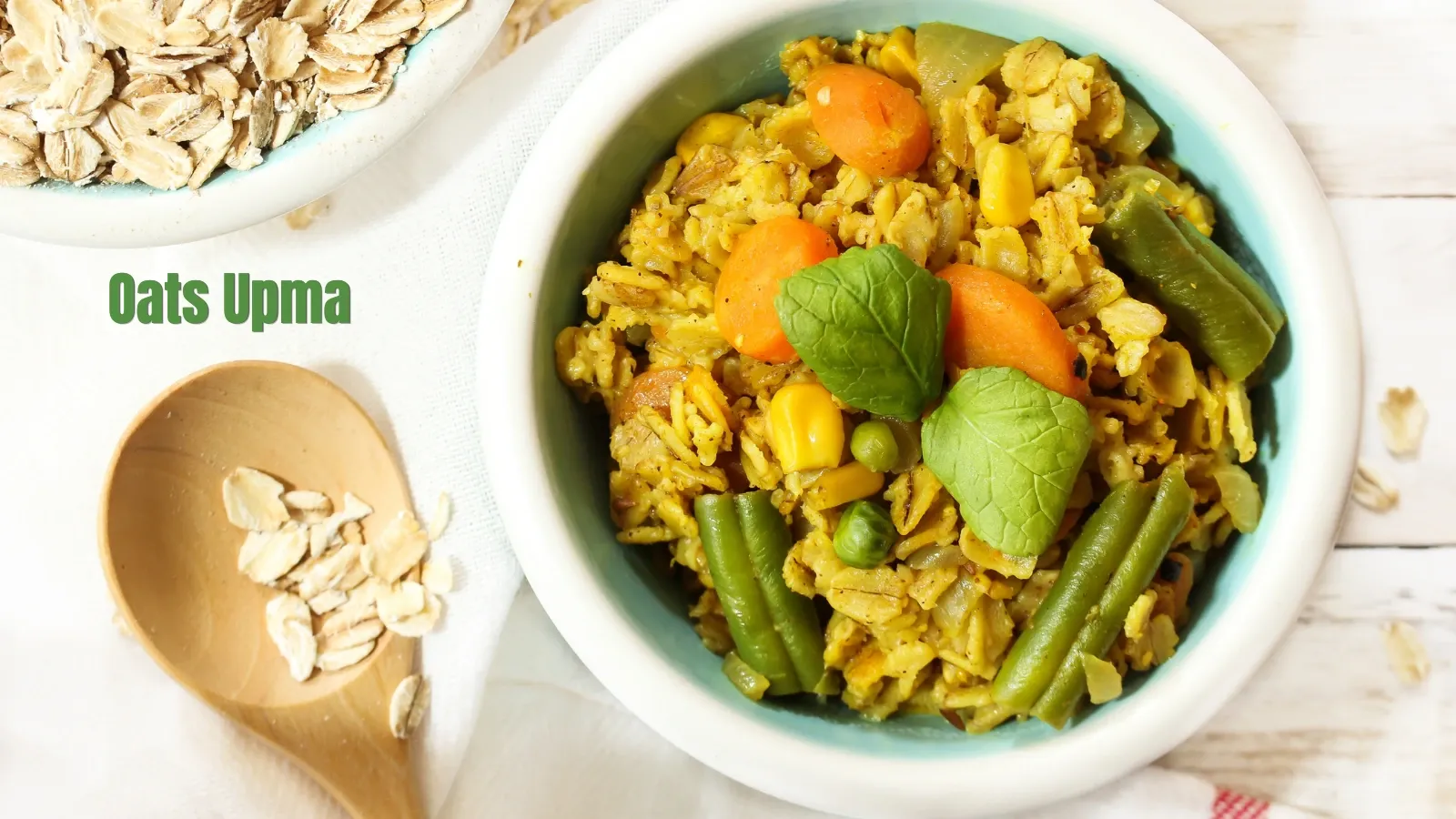
Vegetable oats upma is a South Indian-style savoury breakfast made with rolled oats instead of suji. It's tempered with mustard seeds and curry leaves, and loaded with vegetables and peanuts. One plate gives about 280 kcal, 9 g protein and 6 g fibre, and it takes 15 minutes.
At a glance
Serves | 2 |
Prep time | 5 minutes |
Cooking time | 10 minutes |
Per plate | about 280 kcal, 9 g protein, 32 g carbs, 12.5 g fat, 6 g fibre |
Ingredients
80 g rolled or quick oats, about 1 cup (not instant flavoured oats)
20 g raw peanuts, about 2 tbsp
100 g mixed vegetables: onion, carrot, peas and capsicum, finely chopped
1 green chilli, slit
½ inch ginger, finely chopped
8–10 curry leaves
½ tsp mustard seeds
½ tsp urad dal (optional, for crunch)
¼ tsp turmeric
Salt to taste
About 200 ml hot water
2 tsp oil (1 tsp per plate)
1 tsp lemon juice and 2 tbsp chopped coriander, to finish
Method
Roast the oats. Dry-roast the oats in a kadhai on medium heat for 3–4 minutes, stirring, until they smell nutty. Transfer to a plate. This keeps the upma from turning mushy.
Roast the peanuts. In the same kadhai, dry-roast the peanuts for 2 minutes and set aside.
Temper. Heat 2 tsp oil. Add mustard seeds; when they splutter, add urad dal, curry leaves, green chilli and ginger. Sauté 30 seconds.
Cook the vegetables. Add onion and sauté until soft. Add carrot, peas and capsicum with turmeric and salt. Cover and cook 3 minutes.
Add water and oats. Pour in the hot water and bring to a boil. Lower the heat, add the roasted oats, and stir well.
Steam. Cover and cook on low for 2–3 minutes, until the water is absorbed and the oats are soft but still separate.
Finish. Stir in the peanuts, lemon juice and coriander. Serve hot.
Tips for non-mushy oats upma
Use rolled oats, not instant oats. Instant oats turn to porridge.
Don't skip roasting. Raw oats go sticky as soon as they meet water.
Go easy on the water: about 1¼ cups for 1 cup of oats. Add a splash more only if it looks dry.
Make it the night before? Chop the vegetables and roast the oats and peanuts. In the morning it's 8 minutes start to finish.
For a tiffin, it stays good for 4–5 hours. Add the lemon just before eating.
Oats upma calories and protein
Version (1 plate) | ≈ kcal | ≈ Protein |
|---|---|---|
Vegetable oats upma (this recipe) | 280 | 9 g |
Without peanuts | 225 | 6.5 g |
High-protein: + 20 g soya granules | 350 | 19 g |
+ 50 g crumbled paneer | 410 | 18 g |
Served with 1 bowl curd | 370 | 14 g |
Nutrition is estimated from Indian food composition data (IFCT 2017) for the quantities above, including oil.
How to make it high-protein
With soya granules (best value). Soak 40 g soya granules (20 g per plate) in hot water for 10 minutes, squeeze dry, and add with the vegetables in step 4. This doubles the protein for about 70 kcal more.
With paneer. Crumble 50 g paneer per plate and stir it in at the end, with the coriander.
With curd on the side. The simplest option: a bowl of curd adds 5 g protein and makes the meal more filling.
Make it a meal
Weight-loss breakfast: 1 plate oats upma + chai without sugar, about 340 kcal and 12 g protein.
High-protein breakfast: the soya version + 1 bowl curd, about 440 kcal and 24 g protein.
Light dinner: 1 plate oats upma + 1 katori dal, about 410 kcal and 16 g protein.
Oats upma vs suji upma vs packet masala oats
Per plate | Vegetable oats upma | Suji (rava) upma | Packet masala oats |
|---|---|---|---|
≈ kcal | 280 | 230–280 | 150–170 per packet |
≈ Protein | 9 g | 4–5 g | 3–4 g |
≈ Fibre | 6 g | 1–2 g | 2–3 g |
Keeps you full until | Lunch, for most people | Mid-morning | Mid-morning; most people need two |
Watch for | Too much water makes it mushy | Refined flour, often extra ghee | High salt and flavour mixes; check the label |
Oats upma and suji upma have similar calories, but oats give about double the protein and three to four times the fibre. That's why oats upma keeps you fuller.
Packet masala oats look lighter, but one packet is a small portion with little protein, so most people eat two or snack soon after. Homemade, with real vegetables and peanuts, is better value.
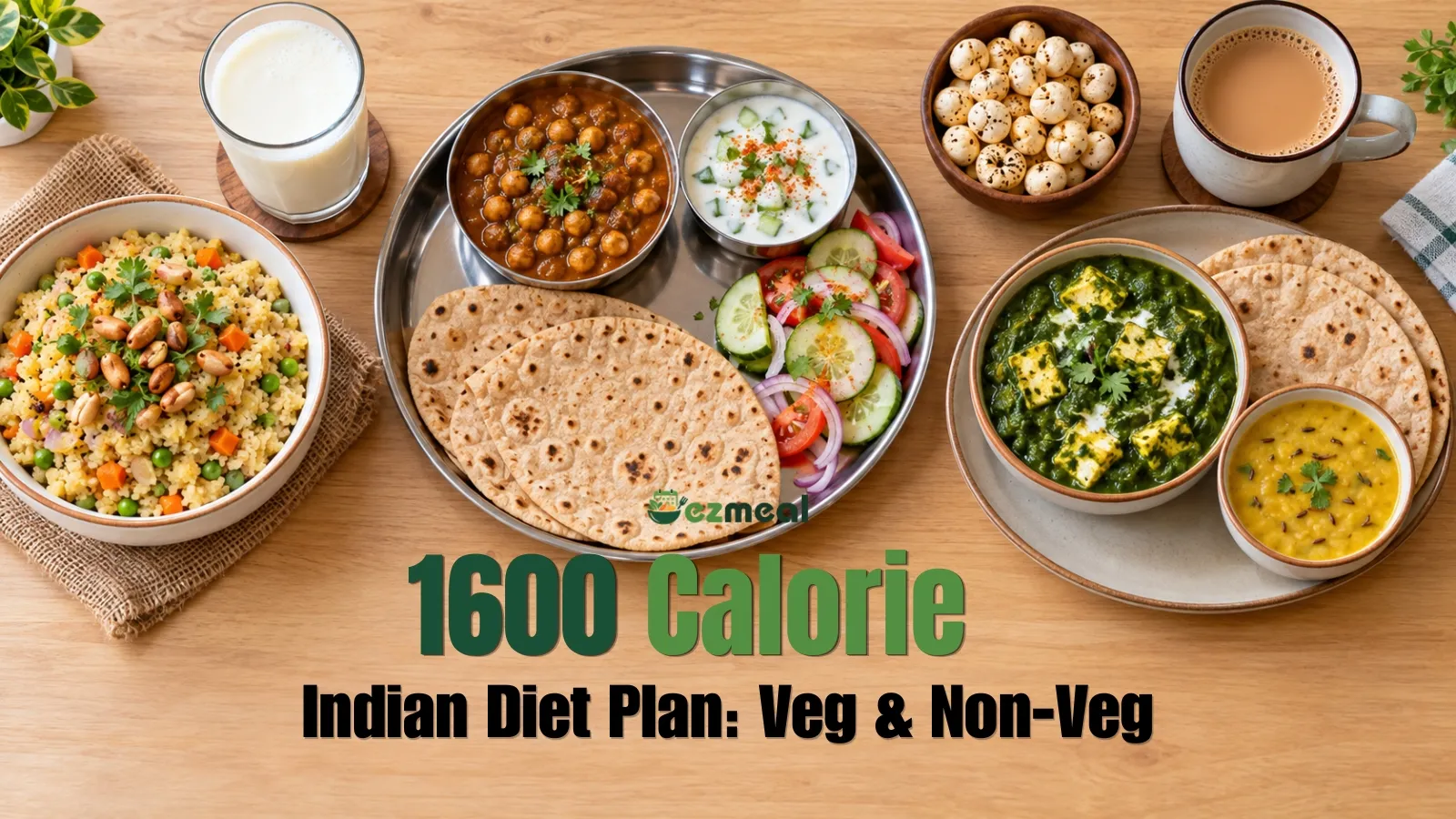
More breakfasts like this: see 15 healthy Indian breakfasts under 300 calories, or try sprouts poha for another quick savoury option. Oats upma is the breakfast in our 1600 calorie diet plan.
Want a week of breakfasts like this, sized for you? EZMeal builds 7 days of Indian meals around your calorie and protein target, with a grocery list. Day 1 is free; the full plan is ₹149, once. Create my free plan →
FAQ
Is oats upma good for weight loss?
Yes. A plate is about 280 kcal with 6 g fibre and 9 g protein, so it keeps you full on fewer calories than most Indian breakfasts. For even more staying power, add soya granules or have it with curd.
How many calories are in oats upma?
About 280 kcal for a plate made with 40 g oats, vegetables, 10 g peanuts and 1 tsp oil. Without peanuts it's about 225 kcal.
Is oats upma better than suji upma?
For weight loss and fullness, yes. Calories are similar, but oats upma has about double the protein and three to four times the fibre.
Can I eat oats upma at night?
Yes. It's light and easy to digest. Have it with a katori of dal or a bowl of curd to make it a balanced dinner.
Which oats are best for upma?
Rolled oats or quick-cooking oats. Avoid instant flavoured oats; they turn mushy and often contain added salt and flavourings.
Is masala oats healthy?
Packet masala oats are convenient, but they're small portions, low in protein, and often high in salt. Homemade oats upma with real vegetables and peanuts is more filling and better value.
This article is general information for healthy adults, not medical advice. If you have a health condition, are pregnant or take regular medication, speak to your doctor or a registered dietitian before changing your diet.