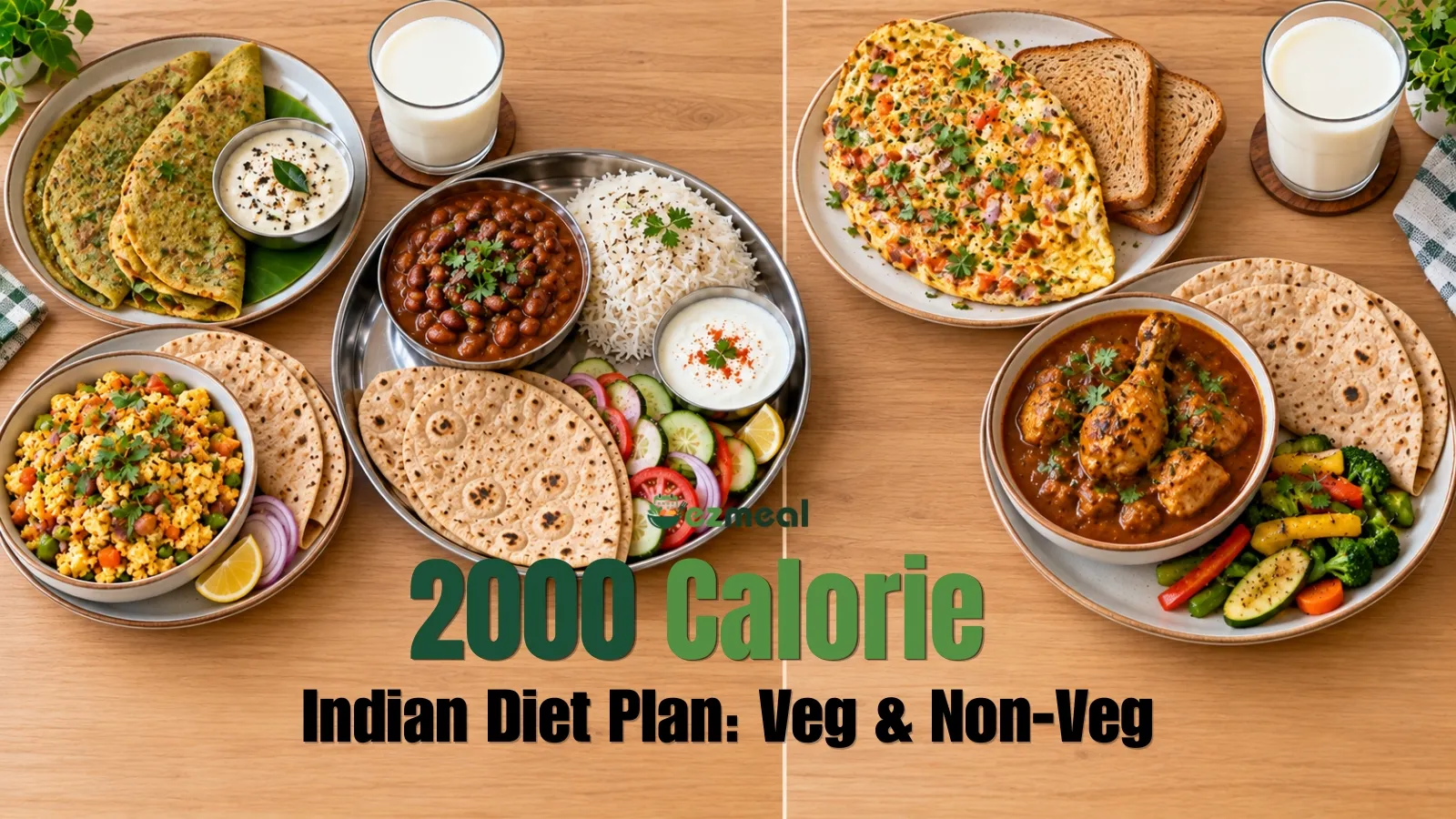
1800 Calorie Indian Diet Plan: Veg & Non-Veg, High Protein
Two full 1,800 kcal Indian days, veg (80 g protein) and non-veg (105 g), in rotis and katoris, plus a week of meal ideas.
 EZMeal team
7 min read
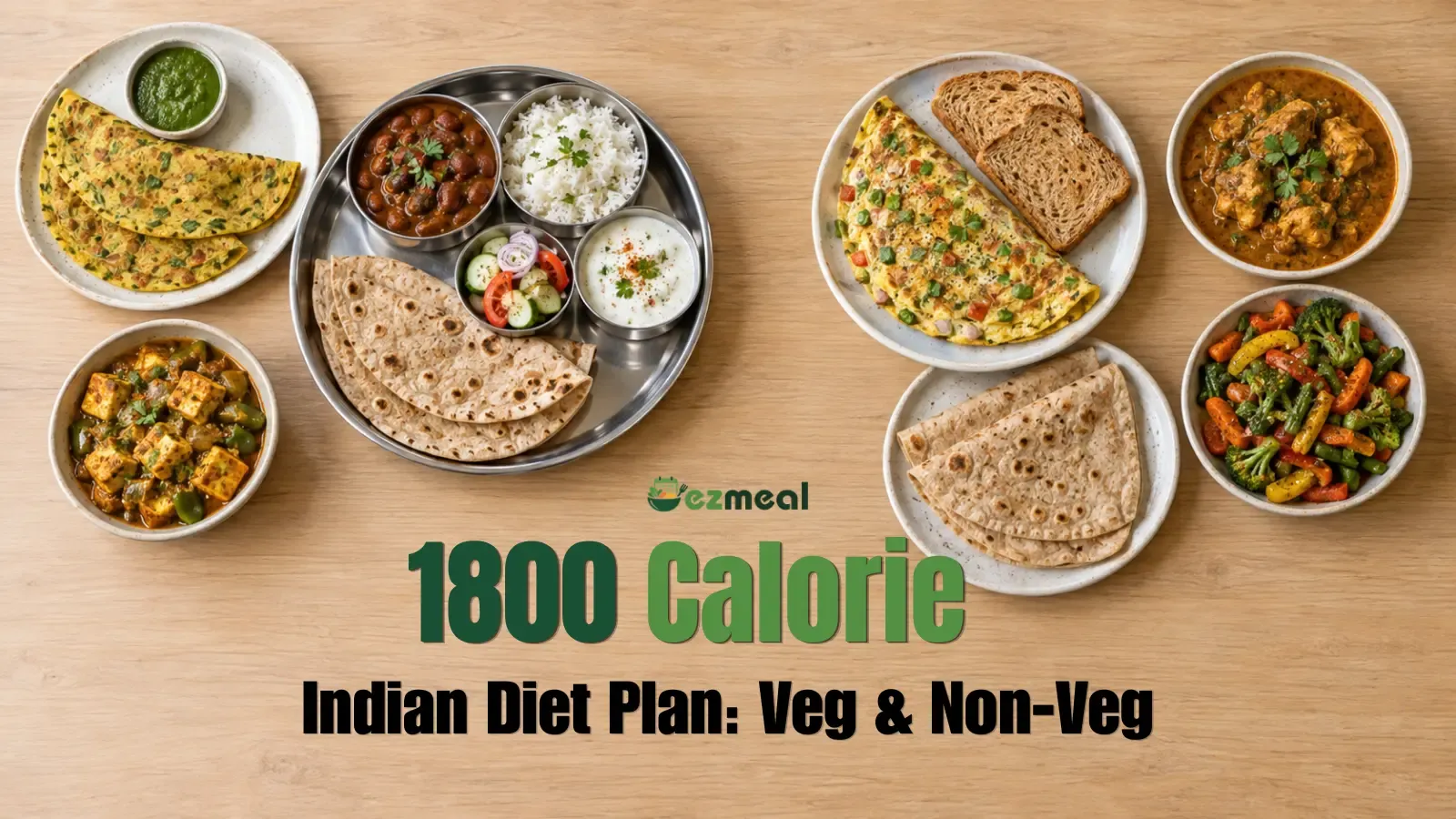
An 1,800 calorie Indian diet plan gives you about 5 phulkas' worth of roti and rice, 3 servings of dal or chilla, paneer or chicken, curd, plenty of sabzi, a fruit and a handful of nuts each day. The vegetarian day below gives about 80 g protein. The non-veg day gives about 105 g. For most men, and for active women, 1,800 kcal is a steady weight-loss target you can actually stick to.
Below you'll find both full days in rotis and katoris, a week of meal ideas, and the mistakes that most often stall weight loss at this level.
Who is 1,800 calories right for?
You are… | What 1,800 kcal does |
|---|---|
A man with a desk job | Steady weight loss for most |
A man who trains 3–5 times a week | Fat loss while keeping muscle, if protein stays high |
An active woman (gym, sport, on her feet all day) | Gentle weight loss |
A less active woman | Roughly maintenance, so weight stays about the same |
The ICMR-NIN plate is built for 2,000 kcal. Our ICMR My Plate guide shows how to scale it down to 1,800 by cutting cereals first. The plans below go one step further. They swap some cereal for extra dal and paneer, so you get more protein for the same calories.
If 1,800 is too much for you, see the 1500 calorie vegetarian Indian meal plan.
Not sure what your number is? EZMeal calculates your calorie and protein target from your age, height, weight and activity. It's free and takes 3 minutes. Find my calories →
A full 1,800 calorie vegetarian Indian day
A phulka here is a small, oil-free roti made from 25 g atta, and a katori is a 150 ml bowl. Milk and curd are toned.
Meal | What to eat | ≈ kcal | ≈ Protein |
|---|---|---|---|
Breakfast (8 am) | 2 besan chilla (50 g besan) with onion, tomato and spinach, 1 tsp oil + green chutney · 1 glass milk (200 ml), no sugar | 360 | 17 g |
Mid-morning (11 am) | 1 apple + 10 almonds + 1 tbsp roasted peanuts | 180 | 5.5 g |
Lunch (1:30 pm) | 2 phulka + ½ katori rice + 1 katori rajma + 1 katori sabzi (1 tsp oil) + 1 bowl curd + salad | 565 | 24 g |
Evening (5 pm) | Moong sprouts chaat (30 g moong, onion, tomato, lemon) + 1 tbsp roasted seeds + 1 cup chai, no sugar | 220 | 12 g |
Dinner (8:30 pm) | 2 phulka + paneer capsicum sabzi (75 g paneer, 1½ tsp oil) | 465 | 21 g |
Total | ≈1,790 | ≈80 g |
The day in food groups
Cereals: about 125 g raw (4 phulkas + ½ katori rice)
Pulses: about 110 g (besan, rajma, sprouts). That's more than ICMR's 85 g, to raise protein.
Dairy: about 450 ml milk, curd and chai, plus 75 g paneer
Vegetables: about 400 g
Fruit: 1 piece
Nuts and seeds: about 30 g
Oil: about 3½ tsp
This is a high-protein version of the ICMR plate: cereals cut, pulses and dairy raised. If you prefer more roti or rice, add 1 phulka and drop the peanuts and seeds.
A full 1,800 calorie non-veg Indian day
This day uses eggs and chicken in place of part of the dal, as ICMR-NIN allows. It keeps one katori of dal and a snack of chana for fibre. The result is about 105 g protein, which suits men who train.
Meal | What to eat | ≈ kcal | ≈ Protein |
|---|---|---|---|
Breakfast (8 am) | Omelette of 2 whole eggs + 2 egg whites with onion, tomato and capsicum (1 tsp oil) + 2 slices whole-wheat bread | 380 | 25 g |
Mid-morning (11 am) | 1 small banana + 10 almonds | 160 | 3.5 g |
Lunch (1:30 pm) | 2 phulka + ½ katori rice + 1 katori dal + 1 katori sabzi (1 tsp oil) + 1 bowl curd + salad | 570 | 24 g |
Evening (5 pm) | 30 g roasted chana + 1 cup chai, no sugar | 170 | 9.5 g |
Dinner (8:30 pm) | 2 phulka + home-style chicken curry (150 g raw boneless chicken breast, 2 tsp oil) + 1 katori sautéed vegetables | 530 | 43 g |
Total | ≈1,810 | ≈105 g |
Making it work
Chicken weight is raw, boneless. 150 g raw is about 110 g cooked, roughly 6–8 curry pieces.
Fish swap: 150 g rohu, surmai or basa has fewer calories and adds omega-3 fats.
Thigh or leg instead of breast: adds about 60–80 kcal. Drop 1 tsp oil to balance it.
Skip the butter chicken. Restaurant curries can carry 3–4 tsp of butter or cream per serving.
The egg whites are optional. Without them, use 3 whole eggs: about the same protein, around 40 kcal more.
One week at a glance
Rotate dishes and keep portions close to the sample days above. Days marked NV use the non-veg day; on the others, any vegetarian protein works.
Day | Breakfast | Lunch | Dinner |
|---|---|---|---|
Mon | Besan chilla + milk | Phulka, rice, rajma, curd | Phulka, paneer capsicum sabzi |
Tue (NV) | Egg omelette + toast | Phulka, rice, toor dal, bhindi | Phulka, chicken curry, sautéed veg |
Wed | 3 idli + sambar | Rice, sambar, beans poriyal, curd | Ragi dosa + paneer bhurji |
Thu | Paneer paratha (1, little oil) + curd | Phulka, chole, salad | Moong dal khichdi + raita + sabzi |
Fri (NV) | Egg bhurji + 2 phulka | Phulka, rice, dal, palak | Fish curry + rice + salad |
Sat | Vegetable poha + peanuts + milk | Millet roti, sarson saag, dal | Tofu tikka + phulka + salad |
Sun (NV) | Sprouts chaat + boiled eggs | Chicken pulao + raita + salad | Light: dal soup + sautéed veg |
Want all 7 days with exact portions and a grocery list? EZMeal builds your week around your calorie target, veg or non-veg, using foods you already eat. Day 1 is free; the full 7-day plan is ₹149, once. Create my free plan →
Easy swaps that keep calories steady
Instead of | Have | Why it works |
|---|---|---|
1 phulka | ½ katori cooked rice or 1 small millet roti | Same calories |
Paneer (75 g) | Firm tofu (120 g) or 100 g low-fat paneer | Similar calories, more protein |
150 g chicken breast | 150 g fish or 4 whole eggs | Fish: slightly fewer calories and protein. Eggs: about 25 g protein and 100 kcal more |
Rajma | Chole or lobia | Same calories and protein |
Milk (200 ml) | 1 bowl curd or 1 scoop whey in water | Whey adds about 15–18 g more protein |
Mistakes that stall weight loss at 1,800 kcal
Weekend eating out. One restaurant dinner of butter chicken, naan and a drink can reach 1,500 kcal on its own. Plan one meal out, not a whole day.
Alcohol. Two beers or three pegs with mixers add about 300–450 kcal, and the snacks that come with them add more.
"Healthy" extras. Dry fruit mixes, granola and protein bars are calorie-dense. A handful of trail mix can be 200 kcal.
Low protein on veg days. Without enough dal, paneer, curd or tofu, hunger rises and muscle is lost. Aim for 75 g or more; see our protein in Indian foods chart.
Not counting cooking oil. Home tadkas often use 2–3 tsp per dish. Measure for two weeks to see your real intake.
Guessing roti size. A large home roti can be 40–50 g of atta, not 25 g. See calories in roti, rice, paratha and dosa.
FAQ
Is 1,800 calories good for weight loss for Indian men?
For most men, yes. Men with desk jobs usually maintain weight somewhere around 2,200–2,600 kcal, so 1,800 creates a steady deficit. Very active or larger men may lose weight on more; EZMeal calculates your exact target.
How much weight will I lose on 1,800 calories?
It depends on your size and activity. Most people at a moderate deficit lose about 0.25–0.75 kg a week. The first week often shows more, from water.
Can I build muscle on 1,800 calories?
Beginners can often gain some muscle while losing fat, if they train with weights and eat enough protein. The non-veg day here gives about 105 g; the veg day about 80 g. Experienced lifters usually need more calories to build muscle.
Is 1,800 calories too much for women?
For active women it's a gentle weight-loss level. For less active women it's close to maintenance. If you want faster loss, see the 1500 calorie vegetarian Indian meal plan.
Can I get 80 g protein on a vegetarian 1,800 kcal diet?
Yes. The vegetarian day above does it with besan chilla, rajma, sprouts, milk, curd and paneer. Swapping paneer for tofu or adding a scoop of whey pushes it higher.
Can I eat rice on an 1,800 calorie diet?
Yes. Both days include ½ katori rice at lunch, and you can swap any phulka for another ½ katori. The total amount of grain matters more than roti versus rice.
Sources
Food values: Indian Food Composition Tables (IFCT 2017), ICMR-NIN
This article is general information for healthy adults, not medical advice. If you have a health condition, are pregnant or take regular medication, speak to your doctor or a registered dietitian before changing your diet.